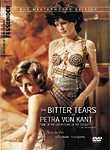
 The Bitter Tears of Petra von Kant (Rainer Werner Fassbinder, 1972) [8]
This is certainly the most obtuse and patient of all Fassbinder films I have seen to this point. That can be a good and a bad thing. I think that Fassbinder has hit the right notes in addressing how the women’s relationships are, especially between Petra and Karin. The film certainly does a good job of showing the manipulation and power inherent in these relationships which goes far beyond any homosexual context that’s on the surface. Even though I liked what the film was doing, I definitely had a hard time getting into it. I have to admit I fell asleep for a few short instances, but this was not out of boredom. It probably wasn’t a good idea to have a bottle of wine and then attempt to fully engage with this film. You need to have a lot of patience in order to really understand what Fassbinder is doing. That intense focus makes it difficult to give this a grade of greatness. That's not some simple, I-don't-want-to-think-while-watching-a-movie statement; I think that the film is a little too rigorous to fully enjoy.
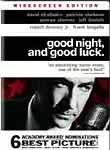 Good Night, and Good Luck (George Clooney, 2005) [7]
I was impressed enough with George Clooney’s direction, and thoroughly impressed with David Strathairn’s hard-bitten performance as Edward R. Murrow, but there wasn’t anything else in particular that overly impressed me with this film. The black-and-white cinematography is solid, with its fluidity in moving through the hustle and bustle of a newsroom and capturing the swirling cigarette smoke, which always looks cool in black and white. Clooney does a good job of laying out the situation for us, and Strathairn is great in his economy of action and expression. I just feel that there is some element in the story that is lacking that would make this a great film. I feel like there isn’t enough conflict and/or tension in the story between Murrow and McCarthy. Maybe it’s the fact that McCarthy only appears in archival footage, but it seems he and the actions of his heinous committee are too detached from the film. That’s a shame because I think this was one element away from being a really great film.
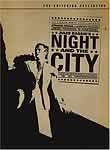 Night and the City (Jules Dassin, 1950) [10] It’s not very often that I have to run out and buy a film right after seeing but this one made me right out and do it. This is an incredibly entertaining film noir with a career-defining performance by Richard Widmark as an American grafter/club tout in London who is doomed from the start. Widmark’s performance as Harry Fabian, a naïve, believing he’s somebody when he ain’t dope is possibly one of the best I’ve ever seen (and I’m not exaggerating). While Widmark’s performance alone could carry the movie, Dassin’s direction isn’t too shabby either. The film is dropped into the messy London underworld, a place where nobody has a past and where only people with money have the power. The trouble starts when Harry beliefs he can become a big shot in the wrestling business only to have a series of unfortunate events occur that make his demise inevitable. There are some great film noir images here, with Dassin emphasizing the sweat, dirt, and worry on the character’s faces. An interesting fact: even though this is film noir, there is really no crime as the axis of the story. The film occupies a world of perpetual crime. I have to say that Night and the City is one of my favorite film noirs, and Jules Dassin, along with Jacques Toureur, as two of the most capable, yet forgotten noir directors.
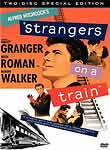 Strangers on a Train (Alfred Hitchcock, 1951) [6]
I had just finished Patricia Highsmith’s novel of the same name that this film was based on for a class in crime fiction and wanted to see how the film stacks up. All being told it was a bit of a disappointment, mostly due to the drastic changes in story between the two. I don’t really think this is a bad film; Hitchcock was a master craftsman. It’s just that I thought the book was much better. What’s missing from the film that really bothers me is the depth of psychological darkness that Highsmith gives to the main characters. Hitchcock strips all that away so there can be a hero and a villain and the standard upbeat Hollywood ending. There are other minor details that get changed but nothing that irks me as much as what I think is a dumbing down of the Guy/Bruno relationship. I’ve been more respectful than a fan of Hitchcock’s work, and this film is tight enough of a suspense thriller that I have to give it a decent grade despite its faults.
 A History of Violence (David Cronenberg, 2005) [9]
Definitely an interesting film and one that is really timely in certain aspects as a critique of American society. The discussion on violence really doesn’t interest me as much as the theme of the inability to be able to escape one’s past. That doesn’t mean I think the violent elements don’t work. They have a very visceral impact even though I think they almost border on being something out of a comic book. I know that’s Cronenberg’s style coming through and while it seems extreme, it fits in the notion that American culture has become readily accepting of violence as a part of life. The one aspect that really interests me is that Tom Stall is considered a hero for doing something that is pretty repugnant and extreme. Still after all this, I think the film really comes back to the idea that this man cannot escape the violence in his past, and that will always be a part of him. The uncertainty left at the end seems to fit because who knows where these characters, and the culture itself will end up.
 A Hole In My Heart (Lukas Moodysson, 2005) [3]
Personally speaking, I’m a person that enjoys a certain amount of cynicism and darkness in their cinema. But there is definitely a distinction between cynicism and a total lack of humanity, and this film has no humanity to be found. It is an ugly film, in terms of aesthetics as well as what actually goes on. I knew going in to this that it had some grotesque scenes, and yet they didn’t have as negative as an effect as I was expecting. I think that Irreversible is still a much more reprehensible film (I bring this up because Sicinski makes a point of comparing the two in terms of critical response, which I see as valid). Both films have no redeeming qualities to them, but what bothers me about this film is that Moodysson wants to make a moral stand even though his film is void of any human qualities. OK, I see that pornography is bad but do you really have to degrade your actors to such an extent? There’s one scene in particular I’m thinking of but I won’t give it away but you’ll know it when you see it. It’s not so much what I see that is unsettling to me; the problem is that someone would actually allow themselves to be subjected to Moodysson’s cruelness. Plus, I don’t even know what you’re trying to say exactly besides pornography is ugly. People can say that Lars Von Trier is cruel and manipulative, but Moodysson makes him look like Mr. Rogers.
It's nearing the end of the month, so I have to find a fresh bash of five albums y'all should be listening to. So here it goes:
1) Neko Case - Fox Confessor Brings the Flood
2) The Secret Machines - Ten Silver Drops (this isn't available for commercial retail yet but you can download it at itunes
3) The Thrills - So Much For the City (I bought this album when it first came out, forgot about it, and recently rediscovered it and am digging it.)
4) Ray Lamontagne - Live From Bonnaroo Ep (for some reason you can't buy this at amazon but you can get it at Ray's website. I was there and it was without a doubt the best set of the festival.)
5) The Magic Numbers - The Magic Numbers
 Where the Truth Lies (Atom Egoyan, 2005) [6]
I really don’t have much to say about this except that this wasn’t what I would call an Atom Egoyan film. That could be a bad thing, but it can also be a good thing in that the story of this film is not as psychological as Exotica or The Sweet Hereafter. Egoyan does a good job of re-creating the different eras of the film, and the film has some really nice images. The performances are a little hit and miss; Kevin Bacon is outstanding but Alison Lohman is a little too shrill and chirpy for a role needs some more steeliness. The one problem I have is that the film gets buried beneath its own intentions. What we have here is a murder mystery but it gets so muddled that it washes over the entire film. From watching this I get frustrated with the way the uncovering of the murder happens. But what works is that Egoyan creates a great representation of a way the world was for two successful entertainers that happened to have underlying tragic circumstances.
In the Mood For Love/2046 (Wong Kar-Wai, 2001, 2005) [10] I feel it's best to review these two films together, not just because they are loosely related but becuase they have the same form and occupy a certain space. Both of these are right in my wheelhouse when it comes what I like. These are two of the most visually stunning films I've seen outside of Terrence Malick. That alone makes it hard to give any less than a ten. But the strength of these films comes not just from the visuals, but how they are used in a form to suit each film. I love how Wong plays with the speed of the frame, creating an emphasis on studying the images. Both films center around the character of Mr. Chow, who is two distinct characters in each film. Each film, however deals with Chow's relationships with women, in the first, with quiet longing, and in the second as a dashing playboy. Through each film we get the feeling that Chow is doomed to repeat the same situation in each relationship, and that what woman he is with is never that important. The women in 2046 come and go and that's the way it is. Chow ends up the same as In the Mood for Love, alone. With these two films, Wong Kar-Wai has proven to be a master of the fleeting love story from a male perspective. Plus, he is a master craftsman at creating some beautiful images.
The Wong Kar-Wai reviews are coming a little later this afternoon but first, it's March Madness. If there's one sporting event that allows even people with no knowledge of it to participate in prediciting winners, it would be the NCAA college basketball tournament. And while many cineastes, if any actually read this site, detest any form of sports, I'm partial to college basketball. So let me indulge myself and bore you with my picks for this years tournament.
Atlanta Region winner: Duke (even though I hate their guts and somebody [Syracuse] beats them)
Atlanta Upset Special: Nothing. I got chalk almost all the way through.
Oakland Region winner: Gonzaga
Oakland upset Special: San Diego State over Indiana
Washington Region winner: Connecticut
Washington Upset Special: Wichita State over Seton Hall & Tennessee
Minneapolis Region Winner: Florida
Minneapolis Upset Special: Arizona over Villanova, Georgetown over Ohio State
Final Four: Gonzaga over Duke
Connecticut over Florida
National Championship: Connecticut over Gonzaga
 The Aristocrats (Paul Provenza, 2005) [3]
To put it plain and simple, this is probably the worst film, in terms of form and structure, which I have seen in a long time. It’s completely awful. Provenza doesn’t let a shot last more than 10 seconds before he has to switch to a different angle, sometimes in the middle of a sentence. It is one of the most annoying, amateurish looking devices I have seen in a film, possibly ever. Add to that the fact that he hardly ever lets a comedian finish his or her version of the joke, needing to think he has to cut to others to keep it interesting; it’s a disaster. And it really isn’t that funny. Sure, Bob Saget and Gilbert Gottfried steal the show but it wasn’t as funny as I was led to believe. The repetition makes the joke deadens the impact and only the comedians that step outside the original form (Martin Mull and Kevin Pollock doing a hilarious Christopher Walken) enliven this boring film.I said a Wong Kar-Wai In The Mood For Love/2046 review was on the way and it will be, hopefully by Monday.
 It turns out my sickening hunch was right as Crash hijacked Best Picture. Yesterday I wrote that if it won, I would boycott watching the Oscars for all eternity. A promise is a promise so I'm through with the Oscars. What is wrong with Hollywood? How can the best film of the year be a film about "paint-by-numbers racism" (not my words, I stole 'em) that offers nothing new or insightful to say about the subject? That Crash can be considered some kind of revolutionary, insightful, or important film is crazy. It has nothing thematically or asethetically that makes it any different from most middle-of-the-road crap that comes out of Hollywood that tacks on manipulative emotional baggage (I'm looking your way, A Beautiful Mind). Another worrisome factor was the brainwashing cult surrounding the film that is making others believe Haggis's retarded logic. I wholeheartedly respect Roger Ebert's opinion, but in this case he is dead wrong in his assesment of this film. Plus, Oprah got all her mindless lemmings to fall in line behind her in Crash's support. It's incredibly dangerous to have people in a place of influence to come out and say this film knows what it's talking about in terms of race. All Crash really is a guilt trip for what passes as a liberal these days. As a liberal myself, this film is insulting to me in that Haggis seems he can pin down race relations to a series of emotionally manipulative moments disguised as something important when they actually offer nothing new or of substance. As for the Oscars, the show itself was the most enjoyable I can remember in some time. Jon Stewart did a bang-up job and I hope he gets invited to host again. But I won't be watching. If films like Titantic, Chicago, A Beautiful Mind, Shakespeare In Love, Dances With Wolves, and Crash continue to win best picture, I have no interest. And it pisses me off.
The floors at our house are being refinished which has seriously messed up my viewing and posting of reviews but we should have a Wong Kar-Wai restrospective coming up. Anyway, the Oscars are tonight and I feel like playing prognosticator. Even though I have only seen one of the Best Picture nominees, I know that film should have no business winning ANYTHING. All this talk of Crash creeping up on Brokeback Mountain and pulling off an upset is truly troubling. As you could tell from my review of Crash, I thought it was a reckless, manipulative, and a shortsighted film. That Hollywood thinks that this film has something meaningful to offer up about race just shows how shallow and vapid these people really are. Yet somehow they and a good majority of critics think that this is an important and powerful film. This makes me want to puke. I haven't agreed much with the latest batch of Best Picture Winners, basically everything since 2000, and if Crash does win Best Picture, I will boycott the Oscars for eternity. Here are my random picks:Best Supporting Actreess: The only one I've seen was Rachel Weisz and I thought it was underwhelming. I'm jumping on the Brokeback bandwagon - MICHELLE WILLIAMSBest Supporting Actor: Dillon's character is the main problem with Crash, so he's gone. I've haven't seen any others so I'll go with the consensus - GEORGE CLOONEYBest Cinematography: If a Terrence Malick film is nominated here, it should win - THE NEW WORLDBest Actress: Nothing here seems like performances that were exceptionally strong. I have feelings that Walk the Line isn't that good, so I'll go with FELICITY HUFFMANBest Actor: Plain and simple I'll go for the upset - DAVID STRATHAIRNBest Director: I've finally come around to the fact that Ang Lee can make just about any kind of film (except blockbusters) and make it quality - ANG LEEBest Picutre: No to Crash. With all this talk about Brokeback Mountain being a revolutionary film, all I see is a standard romance picture with two men instead of a man and a woman. Capote is overrated. Munich has no support. All this leads to something that should never happen in my mind, the director/picture split. But I have to go with GOOD NIGHT AND GOOD LUCK.Also, Paradise Now and Murderball for best foreign film and documentary.
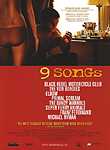
 9 Songs (Michael Winterbottom, 2005) [5]
I have to say that the idea here (song, sex, meditation, song, sex, meditation) is something that appealed to me and I very much like the structure that Winterbottom has created. The execution of that structure is something that does become tedious after awhile and almost makes this film what many people want to categorize it as, explicit sex in a mainstream movie. Well, let’s talk about the sex; it’s definitely done much better than a standard porno. The camerawork, minimalist and at times gorgeously done, creates a much more realistic kind of sex than would be found in a Jenna Jameson “film.” Cut in concert footage that at times has a real connection to the overall theme, especially Black Rebel Motorcycle Club, but other times feels too disjointed. I like the idea of Matt meditating over this in his head, but there’s just something about those sequences that don’t work the way I thought they should. But everything about the film reverts back to the sex. It’s kind of a shame that it has to overshadow everything else. I feel that 9 Songs is a film that wants to be about much more than sex. It’s about how the body and various sensory experiences can overtake the mind in a relationship. I just don’t feel that the film expresses this idea well enough.
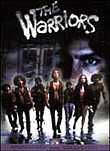
 The Warriors (Walter Hill, 1979) [4]
If I was giving this film solely on camp value, the opening twenty minutes would be a 10. However, the rest of the film leaves me feeling I’m missing something, even though I’m not quite sure what it is. I do think the film moves along way too quickly and is almost all action. While that’s not necessarily a bad thing, there were some things, mostly the sociological elements of the story, which could have been fleshed out more. I heard the novel this film was based on was more of a social critique and that the film comes across as more of a comic book. There are just so many questions that come out of viewing this film. Most of which is what is the context and back history to explain why New York is overrun with hundreds of eccentric gangs? I know that that this has built up a (mostly male) cult following over the years, but I just don’t get. Is it the violence? Help me out, I really don’t know.
It can get pretty boring posting movie reviews all the time. As I've mentioned before, I'm just as big a music fan as I am a film buff. So I figured that every month (or bi-monthly) I would post 5 albums that I have been listening to and enjoying quite a bit, and I hope, that anyone who actually reads this blog will also. So here we go. Give these a listen and once again, enjoy.1) Marah - It You Didn't Laugh, You'd Cry2) Jenny Lewis & The Watson Twins - Rabbit Fur Coat3) Cat Power - The Greatest4) The Jayhawks - Hollywood Town Hall5) The Grateful Dead - Cornell University May 8, 1977 (This isn't a commercial album but a live bootleg that can be found at www.nugs.net. It's been one of the most coveted Dead bootlegs for quite a while.)
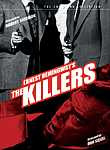
 The Killers (Robert Siodmak, 1946) [7]
I saw this films a couple of years ago in a class at the University of Buffalo and forgot most everything about it except it was a prototypical film noir. It certainly is a sturdy, dependable noir, but it still has some significant flaws. The taut, fantastic opening was based on the short story of the same name by Hemingway, whose name gave the film some promotional clout. The rest of the film centers around an insurance investigator, played by Edmond O’Brien, trying to figure out why two men went to a small New Jersey town to murder The Swede (Burt Lancaster), none of which is in Hemingway’s story. While visually this film is tremendous, there are some issues with the script and characters. Siodmak was a master of the dark/white contrast that defined film noir. He’s also good at creating tension through his imagery. But I still have some lingering questions: What is the motivation of O’Brien’s character? Why is he so interested in a pretty insignificant murder? The whole thing teeters on being ludicrous. There are also times where the wooden acting by Lancaster and Ava Gardner makes me wince. Despite some flaws, I feel this is a great representation of film noir. [Postscript: I rented the two-disc Criterion addition with the 1964 Don Siegel version. I turned it off about half an hour in because it was nauseatingly dated, in a bad 60’sish way.
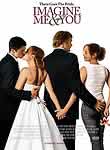
 Imagine Me & You (Ol Parker, 2006) [5]
On the introduction to this site I mentioned that most of these reviews were of films I see from Netflix and that I rarely go to a theatre (for numerous reasons; look it up). Well, I actually went to a theatre and an hour away in Syracuse no less. I drove seventy miles into lake effect snow for a promotional screening of a film that I know will never get played in Binghamton. The only reason I went to see this (besides it was free) was that Piper Perabo was in it. I think she’s a much underrated actress who was fantastic in Lost & Delirious. This film also deals with a same-sex relationship as that one did. Besides gender, there’s nothing in this film that makes it any different from a heterosexual romantic comedy. I tend to feel that the romantic comedy genre has been exhausted and that there are very few films that do anything to break out of that tired formula. This film is just another British romantic comedy with the bumbling Hugh Grant-esqe male lead, a horndog male friend, and intrusive parents. But for whatever reason, probably the spell Piper Perabo has cast on me, I actually enjoyed this film. The relationship between Perabo and Lena Headey was well done. It wasn’t too overwrought with drama but they made it seem as believable as a film can be. This film has enough emotional strength in its dramatic scenes to make the comedic elements, which I feel were overdone, tolerable. While I did enjoy this, I can’t give it any higher than a five because it doesn’t do anything different yet interesting to the genre. And will somebody please give Piper Perabo a role with some real substance and recognition.
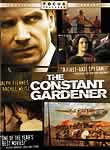
 The Constant Gardener (Fernando Meirelles, 2005) [6]
I won’t say this is a disappointment exactly, but it did not live up to the expectations that I had for it, especially considering how much I like City of God, Meirelles’s debut. He still uses the hyper-kinetic editing and swirling, handheld camerawork that has come to define his style, but I don’t feel that particular style really works that well for this type of film. Even though most of the film takes place in a third-world setting like City of God, it feels almost completely different. We as the viewers don’t focus on those inhabitants really; we are focusing on the Fiennes and Weisz characters (I don’t know why Rachel Weisz is winning all the supporting actress awards, she good, not great). That’s another problem with this film: it doesn’t know what to make the focus of attention. Is it how multi-national corporations exploit the people of poor nations for their own financial benefit, or is it the relationship between the Fiennes character and Weisz. I really don’t know and I think that clouds the overall impact of the picture. But Fiennes, and Weisz give solid enough performances to make viewing this worthwhile.
 The Lady From Shanghai (Orson Welles, 1947) [7]
This often seems to be a forgotten Welles film, but I think it’s a nice little noir that has some really interesting qualities. Like other Welles’ films, this one was significantly recut by the studio against his wishes, and it shows especially in the overdramatic score and shaky transitions. But the essential nature of the film survives. Welles plays a man who can’t really be considered a hero. He’s more a boob that gets into a situation he knew was no good. He even says it in his narration. I feel that the narration is really a plus. It places Welles’ character as an outsider to the privilege and corruption that the rich characters inhabit. He knows better than to get pulled into a bad situation by a woman, but he can’t resist the smoldering Rita Hayworth. The standard noir fare of murder and double-crossing follow, ending up in the much mimicked house of mirrors sequence. That scene is a bit of a metaphor for the entire film: you can’t really tell who a character really is.