Wednesday, November 25, 2009

Film Decade List #19: American Splendor


American Splendor (Shari Springer Berman & Robert Pulcini, USA, 2003)

It's a testament to how entertaining a film American Splendor is when its central character is so cantakerous, moody, and difficult to like as Harvey Pekar. But the film, much like Pekar's work, take the mundane, soul-crushing existence that is most of Pekar's life and makes him a sympathetic, endearing character. Harvery as a person and as a character (played by Paul Giamatti) has his faults but his willingness to tell almost everything seems to wash over his less than desirable attributes. The film eschews traditional biography, instead blending fiction scenes with actors and the real-life characters sitting around talking to the directors. What really makes the two blend together so seamlessly is that the performances so perfectly match the people. Giamatti and Hope Davis as Harvey's wife, Joyce, nail every idiosyncrasy in their real-life character's personalities. The one who nearly steals the entire movie is Judah Friedlander as Toby Flenderson, Harvery's co-worker and self-appointed "nerd." Friedlander sticks everything, from Toby's body language down to his distinctive voice. It's a role that could be seen strictly as comic relief but like everyone else, Toby comes across so truthfully and sincerely, you never end up laughing at him but you identify. The basis of American Splendor is in the moments, to pick some semblance of truth in the human experience that make part of these characters present in everyone that lives in a crappy town, has a dead-on job and is looking for some way to seem worthwhile in life.

Tuesday, November 24, 2009

Music Decade List #19: Neko Case - Middle Cyclone (2009)


Nothing on Middle Cyclone is all that different than what Case has been putting out on record for most of the decade. It is a quantum leap forward in precision and confidence of craft that make this album stand out. The number one focal point of Case has always been her fantastic voice but here, she has the consistent melodies to back it up. It's amazing songs like 'This Tornado Loves You' or 'People Got a Lotta Nerve' never became hit songs (though it probably says more for the state of the music business and radio than the public in general). The songs on Middle Cyclone don't follow any genre in particular but they are all crafted with an atmospheric bent that allows Case to belt or be more subdued at any given moment. The hint of reverb in something like 'Vengeance Is Sleeping' adds a little more to a simple guitar track. But once again, it comes back to the melodies, which I'll make the case that this is the strongest and most consistent set on any Case album. Besides the two I mentioned above, later tracks like the title one and 'I'm an Animal' have fantastic hooks. For an artist who always seem to have trouble getting her songs more attention than her voice, Middle Cyclone feels like that Case has discovered the right formula to accomplish that.

Sunday, November 22, 2009

Film Decade List #20 - 2046


2046 (Wong Kar-Wai, Hong Kong, 2005)
The one word I use to describe 2046 is ethereal. There's something other-worldly about the film and not that it teeters into science fiction territory. The story feels slight and that a host of strong elements (clunky symbolism, useless f/x or action) would completely overwhelm the delicate film that Wong has created. Operating as more or less a sequel to In the Mood for Love (which we'll get to later), 2046 follows the character as Mr. Chung (Tony Leung), this time as more of a playboy but still dealing with a lot of the same themes as that film. Chung again moves from lovelorn moment to moment while Wong throws in some science fiction elements. It all doesn't have the same emotional resonate of INMFL but in a formal sense, 2046 is much less tethered to reality and exists outside reality at times. Once again, Christopher Doyle's cinematography is enviable beautiful and the larger focus on surface images and color make 2046 a bit more of a visual oriented film. That being said, Wong never completely leaves story behind but it really plays second fiddle to creating that feeling that this film is fleeting and exists ever so briefly in the ether. It's incredibly difficult to describe exactly how I felt watching this. It could have been all too easy for this film to fall into a swirling mess without much grounding it. Wong is such an exceptional filmmaker that it feels like he's pulling important shots and themes out of practically nothing or at least sub-interesting material like science fiction (that's my opinion speaking). It's one of those 'either you get it or you don't films' but for someone like me, this is about an easy like as I can get.

Friday, November 20, 2009

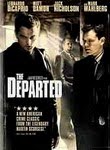
Film Decade List #21: The Departed


The Departed (Martin Scorsese, USA, 2006)

The Departed is by no means classic Scorsese but in regards to the other films he had released this decade, it was a welcome return to what you think a Scorsese film should be. The film works because it has all the hallmark elements of Scorsese's best work, the fast paced, kinetic camera and action, using rock songs in just the right moments, and another fantastic editing job by Thelma Schoomaker. Based on the Asian film Infernal Affairs, the plot focuses on a series of "rats", a criminal infiltrating the Boston Police Department (Matt Damon) and a cop infiltrating his former neighborhood crime racket (Leonardo DiCaprio). Damon and DiCaprio's characters are pretty much mirror images, as they behave and even go for the same woman (Vera Farmiga) as the web of subplots and double crosses unravels around them. It a smart, propulsive screenplay with an ear for Boston, not just in accents but in the behavior of the police and the criminals that occupy the film. Yes, it all makes an entertaining film and there was not many other directors that could have handled the material any better than Scorsese does. The film does get docked some minor points for the ham-handed symbolism at the end and Jack Nicholson seems to lag well behind everyone else in the film in terms of performance. Still, The Departed does enough right to deserve its place on this list.

Tuesday, November 17, 2009

Music Decade List #20: Ryan Adams - Easy Tiger (2007)


After some highly conceptualized releases before it (the Deadsy Cold Roses, the country of Jacksonville City Nights), Easy Tiger was seen by some to a return to the form of Heartbreaker, in that Adams pares and combines his influences into one concise album. The album can also be seen as a more broad, commercially aiming record after the increasingly insular and niche albums that made up Adams's 2005 trio. Easy Tiger was definitely a grower for me, as further listens brushed the "too commercial" feeling I had about it at the beginning and now, it has become a record I go back to time and time again. Never being as big of a believer in Heartbreaker as legend has made it, I would take the songs here over a lot on that album. Like I said above, the album feels like a mix of the various albums that Adams had covered over the previous part of the decade: 'Goodnight Rose' wouldn't feel out of place on Cold Roses (especially when listening to the jammier live versions), 'Pearls on a String' could come from Jacksonville City Nights, even something like 'I Taught Myself How to Grow Old' could be on 29. Perhaps why I've come to like Easy Tiger so much is that you can pick a little bit out of every other Adams album and say "Yes, this song could be on ___". With that being said, it still works together because it feels like the strongest set of songs Adams put on record maybe ever. Nothing sounds meandering of like filler. I could live without 'Two' or 'Everybody Knows', the two most obvious hand-outs to radio, even though they have some merit. I'll take the acoustic numbers, definitely the strongest since Heartbreaker. 'These Girls' and 'Oh My God, Whatever, Etc.' are really exceptional songs. And even though this is titled as a Adams solo release it does feature the Cardinals lineup with Neal Casal, who I will argue makes a huge difference in Adams transformation as a live performer. With Adams, it seems to make a significant improvement in his recorded output using the same performers on every track. It may not be a great record to some, but Easy Tiger earned its place on this list with repeated listening.

(Author's note: The author of this post often spends too much time listening, pouring over, and analyzing the catalog of Ryan Adams. Be prepared for a dissertation-level write up of Cold Roses later on in this decade list.)

Thursday, November 12, 2009

Jerichow


Jerichow (Christian Petzold, 2009) [9]

A variation on The Postman Always Rings Twice, Jerichow is a different kind of neo-noir. The story is never really focused on the plot twists and surprises that populate noir but more by an evocative tone. Thomas (Benno Furmann) is a Afghan war vet back in his hometown with no money. By chance, he comes across Ali (Hilmi Sozer), a Turkish immigrant who owns a chain of snack shops and just happens to need a driver after getting busted for DUI. Thomas goes to work and earns the trust of Ali as well as becoming attracted to Ali's wife, Laura (Nina Hoss), a woman with a past of her own. The rest of the film settles on this simmering romance with Thomas and Laura with Ali left at the edges. It's a fairly standard noir plot but Petzold reworks the emotional ambiance of the story to a refreshing degree. The film has a detached, almost clinical eye to the story and its characters. Moments of passion, paranoia, and violence all play out the same way. The characters are beaten down but in different ways. Thomas and Laura have ended up in circumstances that as of a result of not having money, have created a situation with nowhere to go for them. Ali, while having a lot of money, is a victim of being a immigrant in a land that never really accepts him even with his wealth. He tells Thomas of going on a trip back to Turkey, where he and Laura are planning on permanently moving to. Or so Petzold lets you think. The only big revelation of the narrative comes after Ali returns from his trip and it shifts his character to a boozy, violent, unlikable man into someone that garners sympathy. Petzold is digging a little bit deeper than just into the passion of the characters and by examining race, wealth, and status, even briefly, he adds a dimension to Jerichow that I find appealing.

Wednesday, November 11, 2009

Film Decade List #22: Talk to Her (2002)


Talk to Her (Pedro Almodovar, Spain, 2002)

Almodovar has become known with the way that he handles female characters in his film but Talk to Her is almost in reverse as in it focuses on male characters and their interactions in similar circumstances. Marco (Dario Grandinetti) is a writer whose matador girlfriend ends up in a coma. Benigno (Javier Camara) is a male nurse looking after a patient who has been in a coma for a while. The two men bond over their similar circumstances and the ability to care for those women in their lives that are helpless. While that is a fairly simple review, Almodovar throws many more themes and surreal experiences that give the film so much more meaning. One one level, it's about these men coming to terms with tragic circumstances but there's a deeper underlying darkness to it, especially in Benigno's relationship. He has no real ties to the woman he's looking after other than being her nurse but he wraps himself so tightly in her life, there's a feeling of uneasiness about his relationship. That foreboding notion shows itself by the end, where the sympathy earned by Benigno in his actions earlier in the film comes crashing down in a jarring end. That Marco comes to Benigno after attempting to find an explanation shows a lot about the bond the two created earlier in the film. Talk to Her really is a fairly simple film in its execution but Almodovar creates a complete film universe with a caring storyline. He never quite loses his more surreal tendencies, as a silent vignette bawdily shows, but there's no denying how emotionally powerful the film is, despite how poorly I've described it. That Benigno, who does something truly unforgivable, and yet, you feel just as sorry for him as you feel outrage, is a testament to how strong a story Almodovar has wound. Talk to Her has been one of the films over the past few years that has always stayed with me as being a near perfectly constructed film, not just in story and characters but in emotion.

Monday, November 09, 2009

The Essential Collection: Z


Z (Costa-Gravas, France/Algeria, 1969)

In retrospect, a lot has been made of the Academy Awards for 1969 when Midnight Cowboy took Best Picture and Z took Best Foreign Film, mostly because the Academy seemed to grow a pair of balls that it rarely has shown in the years since. Aside from its political tone, there is nothing in Z that couldn't be found in a well-made thriller to come out of Hollywood in the 70s. That's more than likely the reason that it was met with an embrace in America. It's a taut, economical film that speeds along on its narrative and takes subject matter that is obscure and inflammatory and makes great entertainment out of it.

Based on real-life events surrounding the assassination of a leftist Greek political leader, the film follows the attack on the Doctor (Yves Montand) and the subsequent investigation by a dogged investigator (Jean-Louis Trintignant) as he step by step uncovers a police and government role and cover-up in the "accident." Costa-Gravas bring so many elements and characters together, from those directly involved, to journalists, regular people, and government bureaucrats, that it would be easy for the film to devolve in a confounding web of different accounts and stories. It's really to his credit that he's able to take in all the surrounding stories and characters and still keep the kinetic pace of the central storyline. Because of that pace, the film has much more in common with Hollywood films than what people would think of a foreign films. It's incredibly easy to get caught up in this film without having to do much analytical work. That sounds a little like a backhanded compliment but there's something to be said about making a well-structured film that can keep up for two hours plus. It offsets the political tone of the film a bit, which is strongly anti-totalitarian, and while on one side of a fence, never feels oppressive. Z basically makes the viewer have no other options but to sympathize with the leftists, just out of the notions of justice and basic decency. And for that, which seems a bit radical now, is what made Z a fairly big film for its time.

Sunday, November 08, 2009

Music Decade List #21: Nicolai Dunger - Soul Rush (2002)


A while back, Allmusic used to have a feature on their homepage that would flip through their album picks for a certain period of time. The cover art on Soul Rush is what was initially intriguing about it, because I had never heard of Nicolai Dunger before. So I clicked to find out more and the first sentence of the review mentions Van Morrison and Astral Weeks. From that, there was no doubt that I was going to like this album. The Van Morrison comparisons are exactly correct as the similarities not just to Astral Weeks but also albums like Moondance and Saint Dominic's Preview are all over this. Dunger mixes in so many various elements, from jazz and country elements to more outright Morrison impressions like 'Something New.' Dunger's vocals have the same timbre as Morrison especially when he handles bluesier, more emotive material like the title track or 'Ballad of a Relationship.' But it's 'Doctor Zhivago's Train' that is the cornerstone of the album, throwing jazz drums and horns, a bluesy vocal and almost inscrutable lyrics into a mixture that was practically stunning. It was amazing to hear something like this come out of an act that even something of a cult act in his native Sweden. Dunger hasn't made quite as an impressionable album since, even though his American profile has been raised by working with Will Oldham and members of Mercury Rev on those albums. The blue eyed soul, blues and country combination that made Soul Rush so impressive should be enough for more people to take notice of Nicolai Dunger.

Wednesday, November 04, 2009

Film Decade List #23: Syndromes and a Century


Syndromes and a Century (Apichatpong Weerasethakul, Thailand, 2007)

What makes a film like Sydromes and a Century great is almost impossible to explain to someone who hasn't seen it. It's a quiet yet vibrant film, full of immensely picturesque images but with a story that never follows a conventional narrative. The film is essentially the same story in two parts, with one focusing on a rural hospital setting and the second in a modern yet not real bustling metropolis. To really get the film, the focus has to be on the characters' interactions, to absorb all the small moments of the film and never look for any greater meaning. Reflecting upon this now, it becomes more clear that the relationship of the characters to the two worlds of the film is the most important aspect of it. There's not much greater meaning beyond the simple moments of sly humor and awkward interaction. Weerasethakul handles the scenes with a dream like delicacy, weaving his camera as easily through the lush rural landscape as he does the sterile lab environment of the city. I really don't know of anything better that I could say that would explain it any better. It's definitely not going to be for everyone but if you look beyond simple straightforward narrative, there's a lot to enjoy about Syndromes and a Century.

Tuesday, November 03, 2009

The Girlfriend Experience


The Girlfriend Experience (Steven Soderbergh, 2009) [5]

It's been Soderbergh's career to follow up big box office pictures like the Oceans series with these more "experimental", low budget films. Focusing on an upper-class escort (Adult film star Sasha Grey) and her interactions with her New York clientele, The Girlfriend Experience definitely takes more chances visually and structurally than Soderbergh's popcorn fare. Grey's character is more than an escort; she's a representation of the title, someone who these men can feel more attachment and share candid feelings, more than just a sex worker. Most of these interactions are dealing with the economic meltdown and the 2008 Presidential election, as the men run on about how each of them is being fucked by the poor economy. It's at these moments that the film turns as its not really so much about a high-class hooker. Soderbergh uses Chelsea as a vehicle to get in and examine the upper class of New York and the film becomes a reflection of a certain culture at a certain time. Even Chelsea's boyfriend, a personal trainer, gets caught with some Wall Street douchebags as they take the company Gulfstream to Las Vegas, where they get a suite at the ultimate starfucker casino, The Palms. Chelsea also takes the time to namedrop what designer shoes, dress, and have lunch at Craftsteak. It's this interaction of the film and its characters with a certain element of society that I find most interesting. I never find Chelsea or Grey herself to be that interesting. There are scenes where Chelsea is being interviewed by a journalist who wants to get to the "real" Chelsea. Grey, like her character, throws the wall up at the right time, to a predictable result. The viewer is left with questions unanswered even though we really don't need to have them either. Chelsea falls for a client but brief glimpses are all that are seen until it's called off. That sequence is sort of a general analysis of the film; that there is never much going on beyond the surface of the film, that nothing ever really goes beyond the experience and not the real thing.

Monday, November 02, 2009

Music Decade List #22: Marah - If You Didn't Laugh,...You'd Cry (2005)


Marah's two previous albums before this one were hampered by not enough stanout tracks and a glossy production that never seemed to fit the band's more freewheeling tendencies. If You Didn't Laugh,...You'd Cry is a return to a more loose, live sound and it is a fantastic Marah album. Sporting the group's strongest lineup, the album consistently strong, full of maybe the best group of songs the group committed to one album. The strongest point of the album is the variety of songs the album has, from the raucous opener, 'The Closer', to more introspective numbers like 'So What If We're Outta Tune (With the Rest of the World)' to Dylanesque numbers like 'The Dishwasher's Dream.' Dave Bielanko lyrics have always revolved around street life and the assorted people that occupy his worldview and songs like 'Poor People' or the great 'Walt Whitman Bridge' show a more introspective side of songwriting not really seen on Marah's previous albums. Even though the album manages to throw every kind of sound and influence you can conjure up listening to Marah (The Replacements, Springsteen, Dylan), it works because it all sounds infused with an energy that had been missing on something like 20,000 Streets. People looking for something other than energetic, roots based rock & roll may be disappointed in If You Didn't Laugh,...You'd Cry but for Marah fans like myself, it was a big welcome back to the band that exploded out of Kids In Philly (more on that one later).

Sunday, November 01, 2009

Film Decade List #24: 4 Months, 3 Weeks & 2 Days


4 Months, 3 Weeks & 2 Days (Christian Mungiu, Romania, 2008)

The abortion issue grabs much of the attention of 4M,3w&2D but I've always felt the main issue was living in the crumbling last days of the oppressive Ceausescu regime. Everything in the film is dirty, grimy, crumbling, not pleasant in general. Reflecting again upon the film, it's this overbearingly bleak setting that allows the other actions in the film to take place. The focus of the plot is on two women, Gabita, who needs an abortion, and Otila, her roommate who becomes involved in her helping her find one. What makes the film work is Mungiu knowing how to handle the material without being sensationalistic (to a point) and how to craft tension. Like the setting the two characters are living in, there is a climate of constant surveillance and paranoia hovering over Gabita and Otila, from them checking into the hotel to Otila getting back to check on Gabita after a family dinner. It's Mungiu's tactful pacing and manipulation of tension, even when there isn't much of it in reality, that draw the viewer in more than the social drama present in the plot. If the film wasn't so well-crafted, it would allow for the more dubious moments of logic to expose and hamper the film. Mungiu also creates a lot of sympathy in Gabit and Otila, even through their torrent of bad decisions. The only caveat is that the way they are portrayed leaves the door open for a bit of a feminist argument and how the two aren't strong women. While it could be a problem, the fact that it hasn't been brought up much and that world around is a partial explanation of their actions, it never hampers the film in my mind. 4 Months, 3 Weeks and 2 Days showed that strong social drama can come from all places, except Hollywood.

Sunday, October 25, 2009

Music Decade List #23: BrightBlack - Ala.cali.tucky (2004)


Before Brightblack Morning Light became the group they are thought of now, they tossed out Ala.cali.tucky in 2004 to not nearly the recognition their last two albums have gotten. It's seem odd to me because the sound of Ala.cali.tucky is much more preferable to me than the more electro-funk/soul type sound they have now, which is still pretty good. This is still slow. languid, hazy music but there is more of a roots music base for the music here, with pedal steel, slide guitar and hammond organ in place of the Fender Rhodes and saxes that have graced Brightblack's other albums. It's a record that comes from the same place as their debut or Motion to Rejoin but by using different instruments and influences, it creates a record that has a more "Southern" feel to it, whether that's correct or not. Nathan Shineywater and Rachael Hughes's harmonies are sublime, especially on tracks like 'True Bright Blossom' or 'Old Letters'. The languid pedal steel on 'Own Time Woodland Song' fits BrightBlack's slowpoke pace so much it's astounding to me the group didn't stay on this course. Every song is steeped in the same pace but it's that dedication to not speeding up the music, to let the songs linger, that is the most appealing aspect of the album. It feels as if the album could double as a soundtrack for a film like Paris, Texas or Old Joy. Listening to Ala.cali.tucky, I get the picture of a cinematic western America, the deserts, vistas, and canyons that exists but certainly not in the context of the cinema of people like Malick or Wenders. I haven't encountered much music that I feel has the right timbre to recall a certain place or idea. Perhaps that is why this album made this list.

Thursday, October 22, 2009

Film Decade List #25: Whale Rider


Whale Rider (Niki Caro, 2003, New Zealand)

Whale Rider was really a film that I had no expectations for going in and like most people who have seen it, got swept into it. It's a deceptively simple coming of age story, of a girl named Pai (remarkably played by Keisha Castle-Hughes), dealing with pleasing her grandfather in patriarchal Maori society. The film revolves around Pai attempting to get her grandfather's approval not just in general but also with the possibility of becoming chief of the tribe, something that no woman has been allowed to do. The film really hinges on the performance of Castle-Hughes and she succeeds magnificently, giving Pai the right amount of maturity but with moments of youthful insolence. Caro has a keen eye for extracting the right emotions out of scenes and while nothing in Whale Rider is visually or that thematically daring, it never has to be. The film rides so much on its characters and their performances that it takes a fairly cold-hearted person not to be affected by the film. That Caro takes material fairly unfamiliar to most outside of Maori culture or New Zealand and that relates it to a young girl's struggle growing up is a testament to how universal some film themes are and when they're done well, how enjoyable they are to watch.

Wednesday, October 21, 2009

Hannah Takes the Stairs/Nights and Weekends


Hannah Takes the Stairs (Joe Swanberg, 2007) [3]/Nights and Weekends (Joe Swanberg, 2008) [5]

Whether you want to call it mumblecore or not, there's a lot of elements that bug me about these films. I also happen to see some useful aspects of them, nor do I think they are a boil on the ass of cinema, as some cineastes have essentially said. I recommended the only Swanberg feature I had seen up to this point, Kissing On the Mouth, and after seeing these two film back to back, I may have to take that back. First, there are numerous reasons in regards to aesthetics that I find these films almost unbearable. Secondly, the films end up being so wound up in their own characters' inner workings, that every element surrounding them is non-existent in representation to the film. Both these films play so much as personal stories, not for the audience but more for Swanberg and the crew surrounding them, that can't but come off as self-indulgent. But as someone who has a bit of a soft spot for pretension and as of the relatively same age as the filmmakers, I can see in moments of what mumblecore can accomplish.

Hannah Takes the Stairs simply isn't that good. Shot on DV, which I absolutely hate, the film has no aesthetic sense. Swanberg's style has been focused much on his complete lack of style, as the camera jolts and wanders with no real focus other to be a fly on the wall. The problem for me is that it comes off as so completely amateurish but also with idea that the film is intentionally trying to be that way. I'll take a hermetically closed-off stylist like Wes Anderson or Kubrick to this any day of the week. The story isn't much better, as it focuses on Hannah (Greta Gerwig) and he mutters and stammers her way through a love triangles with two of her co-workers, played by Andrew Bujalski and Kent Osborne. Hannah is so wrapped up in Hannah that what she does at work, or what her relationship is with Matt or Paul, that it manages to offer no insight into her while allowing her to babble about anything is fairly amazing. Couple that with the lack of a visual eye and you get a meandering, banal film.

Nights and Weekends is a little more tolerable because Swanberg has found at least a little cinematic style here. The DV looks a little better and the inclusion of shadows and light make it more striking when the moments arises, the last scene of the film coming to mind. Focusing on the long distance relationship of James (Swanberg) and Mattie (Gerwig) as they try to make it work, drift apart and come together one last time, Nights and Weekends suffers from many of the same problems as the film above. The characters are so wrapped up in their own neurotic dialogue that we get no picture of anything deeper in their personalities. On one level, it can be considered extremely pretentious but there's something in me that finds it appealing in theory. It's just that the execution never lives up to how I picture it to be. There's something about Nights and Weekends that I find more appealing than Hannah, mostly because it's focus is on one relationship. And when Swanberg and Gerwig get some ideas right, like the awkward sexuality of James and Mattie's relationship, I think mumblecore might have something important to say...if it could get it's head out its ass for a full ninety minutes.

Monday, October 19, 2009

Music Decade List #24: Howlin' Rain - S/T (2006)


In my best of, '06 edition, I described Howlin' Rain as a more menacing Grateful Dead. Full of psychedelic intensity one minute, and churning country rock the next, there's a lot of early Dead weaving itself through this album. Howlin' Rain was a side project for Comets on Fire front man Ethan Miller, but Howlin' Rain is preferable to me than anything in the Comets catalogue, mostly because Miller reigns in the fury of the Comets sound and focuses her more on a more laid-back vibe. There's certainly plenty of weirdness here however, as the breakdown in the middle of 'Calling Lightning with a Scythe' can attest to. It's that dual nature of the album, that it has some great guitar and vocal pyrotechnics by Miller but never looses the notion that there are some well-crafted songs here. 'Roll on the Rusted Days' has a Stonsey shuffle, sax outro and all. 'The Hanging Heart' and 'The Firing of the Midnight Rain' get closest to Live/Dead era Dead with their odd flourishes. It's 'Calling Lightning with a Scythe' that sums up almost everything about the album: good melody, psychedelic guitars, banjos, and Miller's vocal howl. It's a song definitely encompassing a lot of Classic Rock tropes and still coming out as something exciting and new sounding. Howlin' Rain clearly shows its Classic Rock influence throughout, and why should that be a bad thing? In an age where music blogs trying to find the next innovative new band, it's sure re-assuring to hear some freewheeling rock & roll back.

Friday, October 16, 2009

Capitalism: A Love Story


Capitalism: A Love Story (Michael Moore, 2009) [6]

While I agree with a lot of what Moore is saying, he never gets all these ideas together to make a fine-tuned film. The film is too scattershot, with no real firm philosophy other than showing the ills of capitalism. It jumps to so many circumstances and ideas, from stories of specific people to Wall Street, that it suffers from a lack of focus of just what Moore is trying to say. On one level, the film is saying that true democracy is the cure for capitalism but isn't that the same system that has allowed capitalism to corrupt it? Moore calls for action but other than a call to action, he never gets specific. The most interesting parts of Moore's work, his attention-grabbing antics, fall flat for the most. Obviously, Moore wants to explain a corrupt system but he's ended up with a film preaching to the choir.

Also, there is the whole 'Michael Moore is a hypocrite' argument that comes out of this. Because Moore is making a film about how bad capitalism is while it has made him a millionaire, that on the surface makes him seem like a hypocrite. I will defend him to the extent that he's just working in the system that's been established. I do happen to think there is a big difference between someone who has become wealthy as an entertainer than as someone operating a corporation or lawyer or whatnot. Moore has become wealthy because people have chosen to see his films or read his books. He's not exploiting workers, or taking their jobs away, or profiting off of other's peoples' misery, tragedies, etc. So really Moore's film is attacking a form of corporate capitalism that has made him wealthy, almost in despite of itself. At least give Moore some credit for using his high-profile position to address some economic issues that more people should be paying attention to.

Sunday, October 11, 2009

Introduction to the Music Decade List and #25: Iron & Wine - Our Endless Numbered Days

Without the Internet, there is a almost certain probability that this list would have never materialized, or been much different than the actual product. 2000 was the heyday of Napster and led to the file-sharing revolution of the last decade. The Internet allowed someone like myself access and knowledge to artists that I would have never known of living in a place like Binghamton. There are not too many people in this town who know much about music and if there are some that do, I don't know them. It's really only because of what Napster brought as well as blogs like Stereogum and An Aquarium Drunkard that I've been able to get into so many different artists. At the start of this decade, my tastes ran almost exclusively towards classic rock and Jamband acts. My interest in both has severely diminished over the past decade and I consider myself a much more knowledgeable listener. But that doesn't mean that I'm any more of an authority over someone who has more of a interest in hip-hop or metal, two genres I have never had any interest in. So, this list isn't meant to be some hipness barometer like Pitchfork would put together, nor is it meant to be any definitive documentation of the decade. These are just the 25 records that are my favorite of the last ten years. Ten years from now, this list could completely be different; right now, it's just what I think right now.


#25) Iron & Wine - Our Endless Numbered Days (2004)

The release of Our Endless Numbered Days happened around the same time Sam Beam went from a little-known but respected artist to the top of the indie mountain all because of a song that isn't even on this album. Zach Braff's Garden State may have come out after this album but most people, like myself, only happened to pay more attention to Iron & Wine because of "Such Great Heights." I may have had The Creek Drank the Cradle before this album but I can't remember exactly. What puts Our Endless Numbered Days ahead of that album for me is that is Beam's first professional and cleaner yet just as intimate sounding album. While some may find the lo-fi, home recordings of his debut, the cleaner, fuller sound of Our Endless Numbered Days does so much more to enhance the material. The addition of additional instruments and vocal tracking makes Beam's songs much more full and appealing while never losing the intensity and introspective nature of his debut. The collection of songs on the album from top to bottom is the strongest in Beam's catalog. Most of the songs still have a plaintive quality to them but with the addition of bluesy shuffle on songs like "Free Until They Cut Me Down" and "Teeth in the Grass." But it's still the intimate nature of the more somber songs that are the album's strongest moments, whether it's the simple guitar and vocals of "Sunset Soon Forgotten" or the bit more elaborate but spectacular "Sodom, South Georgia." Our Endless Numbered Days has been the Iron & Wine album that has captured my attention the most over the past decade While Beam has expanded his sound to include ambient and African-influenced sounds, it's still the mostly straightforward folk music of this album that appeals to me the most.

Last Listening Post of 2009

This will be the last listening post before I post my favorite albums of 2009. This aside from the top 25 list of the last decade which I swear I will start soon.

The Avett Brothers - I and Love and You
Built to Spill - There Is No Enemy
Alberta Cross - Broken Side of Time
The Black Crowes - Before the Frost....Until the Freeze
The Cave Singers - Welcome Joy